Skip to content


Counterfeit detection in banknote handling equipment has become increasingly sophisticated—but the core challenge remains the same: authentic banknotes carry subtle, repeatable “signatures” that many counterfeits fail to reproduce consistently. Among the most reliable of these signatures are magnetic features—because they’re hard to imitate with standard printing and materials, and because magnetic sensing can work even when notes are dirty or visually degraded.
In this article, we’ll explain what magnetic detection checks, then compare two common implementation approaches in banknote equipment:
- TMR (Tunneling Magnetoresistance) sensor arrays—including full-width, multi-channel designs
- Segmented magnetic heads—traditional multi-track magnetic sensing modules
Why Magnetic Detection Matters in Banknote Authentication
Modern banknote sorting and counting machines rarely rely on a single method. Most combine optical imaging (CIS), UV, IR, size/thickness, and magnetic sensing to cross-check authenticity signals—because counterfeiters may pass one test but fail another. Many commercial systems explicitly list magnetic ink and metallic/security thread checks as part of their verification stack.
What Magnetic Detection Checks on a Banknote
Magnetic detection is typically used to verify that a note contains the expected magnetic features for that currency + denomination, for example:
1) Magnetic ink presence and pattern
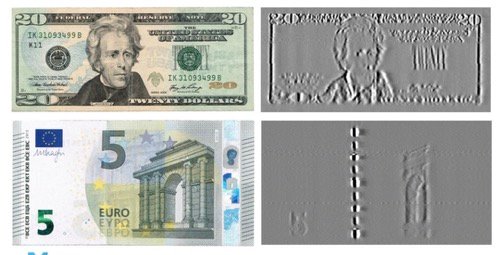
Some banknotes contain inks with ferromagnetic components, producing measurable magnetic responses under a sensing head. Authentic notes often create denomination-specific magnetic “maps” or patterns that can be compared against expected references.
2) Metallic/security thread or strip presence and location
Many currencies use embedded or windowed security threads, and position often varies by denomination (a common public anti-counterfeit feature).
Machines can authenticate threads by detecting magnetic/metallic responses and confirming where the thread appears across the note.
3) Magnetic feature integrity under real-world wear
Beyond “is it present,” high-quality detection also asks:
- Is the thread broken, missing, displaced, or abnormal?
- Do the magnetic patterns match expected shape/spacing?
These are exactly the cases where sensor architecture (coverage + sensitivity) becomes decisive.
Two Magnetic Sensor Architectures in Banknote Machines
Approach A: Segmented magnetic heads (multi-track “strip” sensing)
A segmented head typically uses multiple discrete tracks (e.g., 1, 2, 3, 10 tracks depending on design) across part of the transport width.
It reads magnetic signals only where tracks exist, which can be effective for many standard checks—but can also leave gaps in coverage.
How it’s commonly used:
- Detecting magnetic ink in specific regions
- Confirming the existence of a thread/strip if it crosses one or more tracks
Approach B: TMR sensor arrays (including full-width multi-channel designs)
TMR (Tunneling Magnetoresistance) sensors are magnetoresistive devices known for high sensitivity and favorable linearity/low hysteresis characteristics, which supports detection of weak magnetic fields.
In banknote systems, TMR can be deployed as an array to capture richer magnetic information. Patents covering currency verification heads highlight the need for high sensitivity, low noise, and high signal-to-noise ratio because banknote magnetic signals can be very weak.
Direct Comparison: TMR Arrays vs Segmented Magnetic Heads
1) Sensitivity and signal-to-noise ratio (SNR)
What matters: banknote magnetic features can be faint, and real-world notes introduce noise (wrinkles, varying distance to sensor, contamination).
- TMR arrays: widely associated with high sensitivity and strong measurement characteristics, making them well-suited to weak-signal detection.
- Segmented heads: performance varies by head design; they can work well, but sensitivity and noise performance may be less optimized for very weak or degraded signals depending on the sensing element and mechanical spacing.
2) Coverage: blind spots vs full-width imaging
This is the biggest architectural differentiator.
- Segmented heads: by design, coverage is concentrated in tracks. Any region between tracks can become a blind spot, especially if the magnetic feature is narrow, offset, or distorted.
- Full-width TMR sensor (18-channel): captures signals across the transport width in parallel. As you noted, a full-width design has no blind spots, which is especially important for thread authentication and magnetic imaging.
Why this matters in practice
- Security threads can be partially missing, torn, or shifted within a worn note.
- Notes may feed with slight skew or mechanical variation.
A full-width array reduces the risk that the “interesting part” of the thread simply passes through a gap in the sensing pattern.
3) Handling damaged, missing, or abnormal security threads
Security thread checks aren’t only about “metal detected.” High-value sorting often needs to detect:
- Broken or discontinuous thread signals
- Abnormal position (wrong lateral placement for denomination)
- Partial absence (e.g., cut or delaminated areas)
With magnetic imaging—not just point detection—you can treat the thread response as a pattern across width and along the transport direction. That’s where full-width multi-channel sensing tends to outperform track-based approaches.
4) Parallelism and throughput
If you must authenticate at high speed, you want:
- stable signals at short dwell times
- parallel capture rather than sequential scanning
Our designs:
- Banknote sorter: 18-channel TMR sensors read multiple signals in parallel
- Banknote counting machine: an 18-channel full-width TMR sensor
This architecture supports richer inspection at speed—without requiring multiple passes.
Why Full-Width 18-Channel TMR Is a Strong Fit for High-Confidence Authentication
If your goal is counterfeit detection that remains reliable under messy real-world conditions, full-width multi-channel TMR offers a clear set of advantages:
- High sensitivity + high SNR for weak magnetic signals (supported by TMR characteristics and currency-verification requirements)
- No blind spots across the banknote width (critical for thread integrity checks)
- Better detection of damaged/missing/abnormal threads, because you’re measuring a pattern, not just a few tracks
- Parallel signal capture for speed and throughput
In short: segmented heads are often “good enough” for basic checks, while full-width TMR arrays are better aligned with pattern-level authentication and robust performance on worn notes.